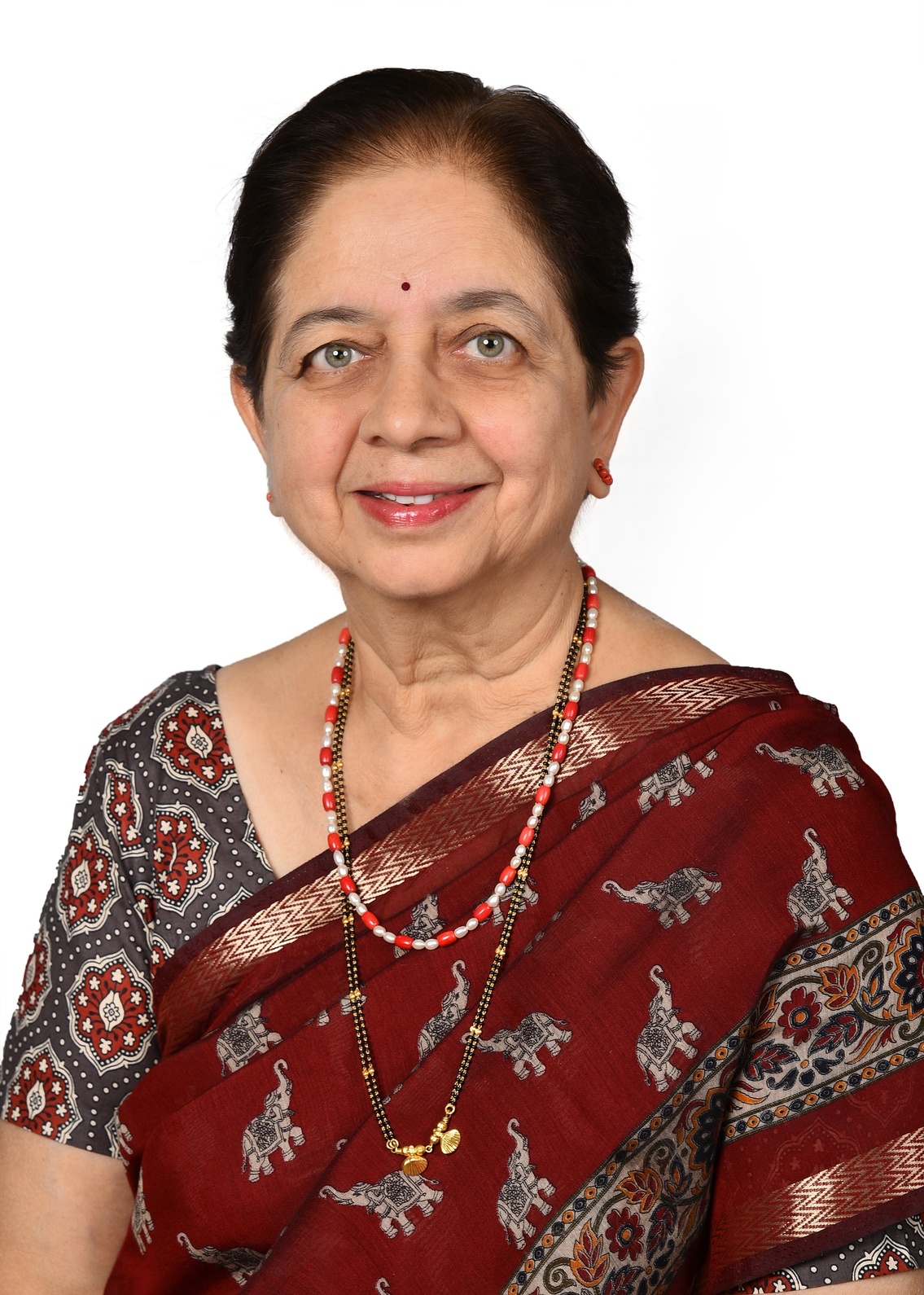
Dear Students,
It gives me great
pleasure to welcome you all to the Shri Balmukund Lohia Centre of Sanskrit
& Indological Studies. The Sanskrit Department, the oldest in the
Vidyapeeth has witnessed a steady growth over the last fifty years firmly
establishing itself as a matured institution.
This is the first
department of the Tilak Maharashtra Vidyapeeth. The Vidyapeeth started an
independent Sanskrit College named 'Shri Balmukund Sanskrit Mahavidyalaya' on
2nd December 1948. On 24th April 1987 the Vidyapeeth got the status of
"Deemed to be University" and there was a structural change in the
administrative and academic set up of the Vidyapeeth. Degrees like Visharad and
Parangat came to be considered as equivalent to the B.A. and M.A. degrees
respectively of the other statutory universities. Besides, Vidyapeeth started
Vidyavachaspati (Ph.D.) in Sanskrit and Indology which attract quite a number
of students.
The teachers,
beside their research and teaching, have always strived for making Sanskrit,
Indology and Japanese studies more accessible, attractive and useful to the
students as well as common people. The devotion to their subjects is such that
they do not hold back even on the pretext of weekly holidays i.e. Saturday and
Sundays from teaching the respective courses. Students enrolled for various
courses, indeed present a unique profile. They come from different walks of
life, viz. housewives, doctors, engineers, lawyers, professionals, retired
people and so on. Since there is no age limit, people who want to utilize their
leisure for personal growth and find a unique opportunity to do so. They are
usually found to be eager to learn more of the ancient literature, language,
philosophy and ancient Indian culture. The ambience in the department is build
to make the students feel at home. The syllabi of various courses were revised
with a view to give emphasis on ancient Indian culture, philosophy and
language.
Methods and
techniques that are used in the department for imparting knowledge present
unique profile. Competitions, co-curricular activities are conducted. Seminars,
workshops and special lectures are organized, which get overwhelming response.
Moreover, frequent use of various visual aids and practical field training
during the educational tours help the students to reinforce classrooms
learning. Similarly, special guidance workshops for external students are also
organized which are greatly appreciated by the students. On behalf of all the
teaching and non-teaching staff I welcome you all and wish you to get success
in all educational activities.
Dr. Manjusha Gokhale
Dean and HoD
S. B. L. Centre of Sanskrit and Indological Studies
Board of Arts and Fine Arts